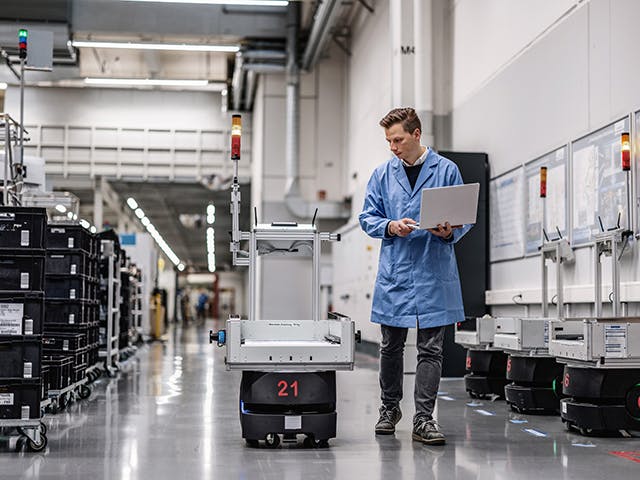
Manufacturing Process Design
For manufacturing process design, the MES model should provide a structured method to define and align manufacturing process plans with product design, mBOM and their requirements. This enables execution of the “R&D” manufacturing process designs concurrently with the production products and processes.
Camstar’s manufacturing process design and modeling capabilities enable vetting of the manufacturing process early during stages, allowing more rapid and reliable transition to manufacturing during new product introductions.
With revision-controlled and auditable definitions of the production processes – including operations, specifications, routes, resources and materials – engineering and utilizing past performance of similarly designed manufacturing processes and products, plus current capabilities and capacity for more rapid process optimization. Understanding of actual throughput, yield, cycle times and as-built product quality data enable more accurate capacity planning process designs that can be manufactured according to core capabilities.
Discrete and Batch Processes
Camstar’s MES offers industry-specific platform configurations for the Medical Devices, Biotechnology, Solar, Electronics, Semiconductor and Metals industries to deliver specific capabilities for the industries and accelerate deployment. Camstar’s platform is designed to readily support batch, discrete and hybrid manufacturing processes.
Camstar customers can standardized on Camstar’s Enterprise Platform for batch and discrete manufacturing processes in order to provide full traceability from finished product back to raw material, and to improve root cause analysis across multiple batches and discrete devices.
Camstar has the only MES model that supports a broad diversity of manufacturing industries and batch and discrete processes – it supports very complex process workflows, high volume automated data collection, mass customization, discrete assembly, batch process, rolled products and more. The highly configurable platform adapts to the users’ business without custom code.
Camstar Manufacturing’s Audit Trail is the basis for the complete electronic as-manufactured discrete Device History Record, Batch Record or Lot History Record (eDHR, eBR, or eLHR).
Weigh and Dispense
Manufacturers that standardize on Camstar’s Enterprise Platform for their batch (weigh and dispense) and hybrid processes are ahead of the game, with proven ability to improve quality levels and shorter time to volume. They can achieve effective root-cause analysis and corrective action based on materials and processing conditions from process start (including weigh and dispense) through end product.
Camstar customers can standardized on Camstar’s Enterprise Platform for batch weigh and dispense and discrete device manufacturing processes in order to provide full traceability from finished product back to raw material, and to improve root cause analysis across multiple batches and devices. The single, integrated system gives the flexibility and configurability to meet the business needs of hybrid operations that include weigh and dispense as well as discrete device manufacturing. As a result, they have a much better understanding of weigh and dispense processes, fewer product issues, and higher yields for more reliable quality output.
Weigh and Dispense capabilities in Camstar’s MES include:
-
Procedural recipe execution
-
Online operator instructions
-
Target weight adjustments with tolerances
-
Positive weighing against targets
-
Automatic weight input from scale prior to dispensing
-
Assay and potency compensation
-
Manual override of scale with authority
Fabrication Fab, Assembly and Test
Camstar’s leading SemiconductorSuite MES is ready to support wafer fabrication, as well as IC and discrete assembly and test operations out-of-the-box. It is powerful enough to handle high transaction volumes, and is flexible enough to meet each site’s specific needs.
Camstar’s MES enables work in process (WIP) tracking in complex workflows with hundreds of fab operations, frequent rework paths and parametric data collection. The MES supports complex routings in wafer test, die preparation, bumping, back grind, assembly and final test. Multiple products on a wafer in the fab, multi-die parts, stacked die assembly, and final test binning are all part of the solution, eliminating the need to modify the system.
Self-auditing eDHR
The self-auditing eDHR is based on electronic manufacturing process enforcement and a continuous self-auditing as-manufactured electronic device history records (eDHR). For a self-auditing eDHR, the MES must enforce through automatic control at every step of the process all of the five “Ms”: Material, machine, (hu)man, measurements and methods. This part of the self-auditing eDHR reduces process variability, eliminates errors and redundant checks, removes the overhead of manual paper processes, and ensures proactive enforcement of corrective and preventive actions.
The self-auditing eDHR prevents product from moving forward or being shipped until every element is complete and correct. The delivery of a self-auditing eDHR includes of electronic, real-time, searchable history of the entire manufacturing and quality process – including traceability and genealogy, exceptions, and automated data verification and product release.
Camstar's customers report that since deploying Camstar's Enterprise Platform with self-auditing eDHRs:
-
Their traceability search efforts are shortened from weeks or months to just minutes.
-
They are able to prevent processes and product issues that would have cost as much as $200,000 per occurrence.
Materials Tracking & Certification
Camstar’s MES provides electronic manufacturing process enforcement and a continuous as-manufactured audit trail. Through automatic control at every step of the process, the MES tracks, certifies and enforces all of the five “Ms”: Material, machine, (hu)man, measurements and methods.
If a defective component lot is identified, material tracking provides the forward and backward material traceability that tells us “where-used,” or every sub-assembly or final product in which it is found. Instant access to where-used details enables fast bracketing, and precisely identifies the affected products and materials that need to be contained.
Backward traceability based on material tracking complements forward traceability and where-used analysis in that it details every component and sub-assembly that contributed to a given lot or unit.
Automatic material certification and enforcement certifies that the material used in a process is specified for the process and product, has been certified for use, and not expired. Material certification reduces variability, eliminates material certification errors and redundant checks, removes the overhead of manual material certification processes, and ensures proactive enforcement of corrective and preventive actions.
Likewise, if a piece of equipment or a process revision caused a nonconformance during a specific time period, where-used analysis tells us every lot or unit that was processed on it during that time. Instant access to where-used details enables fast bracketing, and precisely identifies the affected products that need to be contained.
Equipment Tracking & Certification
Camstar’s MES provides electronic manufacturing process enforcement and a continuous as-manufactured audit trail. Through automatic control at every step of the process, the MES tracks, certifies and enforces all of the five “Ms”: Material, machine (equipment), (hu)man, measurements and methods.
If a piece of equipment or a process revision caused a nonconformance during a specific time period, where-used analysis based on equipment tracking tells us every lot or unit that was processed on it during that time. Instant access to where-used details enables fast bracketing, and precisely identifies the affected products that need to be contained and equipment that needs to be investigated.
Backward traceability based on equipment tracking complements forward traceability and where-used analysis in that it details every equipment or machine that contributed to a given lot or unit.
Automatic equipment certification and enforcement certifies that the equipment used in a process is specified for the process and product, is in a ready state, and is not overdue for maintenance or calibration. Equipment certification reduces variability, eliminates equipment certification errors and redundant checks, removes the overhead of manual equipment certification processes, and ensures proactive enforcement of corrective and preventive actions.
Operator Tracking and Certification
Camstar’s MES provides electronic manufacturing process enforcement and a continuous as-manufactured audit trail. Through automatic control at every step of the process, the MES tracks, certifies and enforces all of the five “Ms”: Material, machine, (hu)man (operator), measurements and methods.
If an operator is suspected of causing a nonconformance during a specific time period, where-used analysis based on operator tracking tells us every lot or unit that was processed by the operator during that time. Instant access to where-used details enables fast bracketing, and precisely identifies the affected products that need to be contained and operators need to be trained.
Backward traceability based on operator tracking complements forward traceability and where-used analysis in that it details every operator that contributed to a given lot or unit.
Automatic operator certification and enforcement certifies that the operator that performs a process is trained and certified for the process and product, completes the electronic signature, is in logged into the work center, and is not overdue for training and certification. Operator certification reduces variability, eliminates operator certification errors and redundant checks, removes the overhead of manual operator certification processes, and ensures proactive enforcement of corrective and preventive actions.
Electronic Work Instructions
High quality products and regulatory compliance depend on operators performing the work exactly as work instructions specify. Human error can be high when operators have to look through paper instructions, write data and dates on forms, and analyze the data for validity. Electronic work instructions remove these errors.
Camstar’s electronic work instructions are step-by-step instructions or tasks that automatically guide an operator progressively through work at a work station. The electronic work instructions are complete and enforceable.
Electronic work instructions are “structured” so that the specifications and tasks are enforceable, and the operators and their actions are traceable. Tasks in the electronic work instructions can be configured to require operator acknowledgement or specific data collection, or to simply be informational history in the manufacturing audit trail.
Operators acknowledge each task in the electronic work instructions as it is performed, either with a simple click, or with a specific “yes” entry, or by collecting detailed parametric data.
Process and Procedure Enforcement
Camstar’s MES provides electronic manufacturing process and procedure enforcement and a continuous as-manufactured audit trail. Through automatic control at every step of the process, the MES tracks and enforces all of the five “Ms”: Material, machine, (hu)man, measurements and methods (processes and procedures).
If a process or procedure revision caused a nonconformance during a specific time period, where-used analysis based on process and procedure tracking tells us every lot or unit that was processed on it during that time. Instant access to where-used details enables fast bracketing, and precisely identifies the affected products that need to be contained and processes and procedures that need to be investigated.
Automatic process and procedure enforcement certifies that the revision of the process and procedure used is specified for the product and step, and is in an approved at the current time. Process and procedure enforcement reduces variability, eliminates process and procedure enforcement errors and redundant checks, removes the overhead of manual process and procedure enforcement, and ensures proactive enforcement of corrective and preventive actions.
Quality Data Collection and Enforcement
The Camstar manufacturing model includes step-by-step operator procedures for parametric and quality data collection with test specifications, limits and out-of-spec actions.
The Camstar supply network manufacturing model for suppliers and contract manufacturers defines parametric and quality data collection requirements with critical-to-quality product test specifications and limits.
If the quality data collected reveals that the process or product does not meet specifications, action such as putting the material on hold, stopping the process or taking the equipment out of service is automatically taken.
Automatic quality data collection enforcement certifies that the revision of the quality data collection definition used is specified for the product and step, and is in an approved at the current time. Quality data collection enforcement also ensures that the product does not move to the next step until all quality data is collected and meets the specifications.
Quality data collection enforcement reduces variability, eliminates quality data collection enforcement errors and redundant checks, removes the overhead of manual quality data collection enforcement, and ensures proactive enforcement of corrective and preventive actions.
Electronic Signatures
Regulated manufacturers deploy Manufacturing Execution Systems to eliminate the burdens of paperwork, increase efficiency and improve product quality. Accompanying these systems is the FDA mandate to ensure compliant and secure electronic signatures for the manufacturing audit trail.
Camstar’s Electronic Signatures comply fully with FDA Title 21 CFR Part 11, employing robust security access, computer-generated audit trails, fraud detection, data retention and archiving, unique username/password enforcement, and electronic signature event capture.
Electronic signatures are electronically stored records that denote accountability by the signer that he or she performed a particular activity. The description of the activity and the required electronic signatures are recorded in the electronic manufacturing audit trail.
Each electronic signature entry contains the electronic signature requirements, their meaning, and how they were met, that is the names of the signers, their roles, the activity with which they were associated, and the date and time stamp.
Labeling
Accuracy, quality and compliance in manufacturing can quickly be derailed if a unit, lot or batch is lost or improperly identified. Customers and regulatory bodies insist on accurate and informative product labeling, which can be cumbersome to produce with disconnected systems.
Camstar’ accurate and timely product labeling and label printing automatically prints product and tracking labels from original specifications and real-time manufacturing data, ensuring that labeling is complete and accurate, is produced in a timely manner, and is attached to the proper unit, lot or batch.
Camstar’s label printing automatically prints product labels based on your business rules. New labels can be printed whenever characteristics of material is established or changed.
Dispatch Management
Well-executed production plans result in shorter cycle times, on-time deliveries and less demand on limited resources. Dispatch management that properly sequences manufacturing orders and work in process (WIP), coupled with automatic enforcement, makes it easy for operators to work on the right material at the right time.
Camstar’s dispatch management shows operators the work-in-process priorities prescribed by production planners and schedulers. Dispatch management eliminates guess-work by instructing the operator to work on appropriate units first. By enforcing the dispatching rules, dispatch management improves manufacturing efficiency.
Dispatch Management instructs the operator to:
-
Start work in process from manufacturing orders in the sequence as defined by your dispatch management rules
-
Work on units, lots or batches at each operation or work center in the sequence as defined by your dispatch management rules